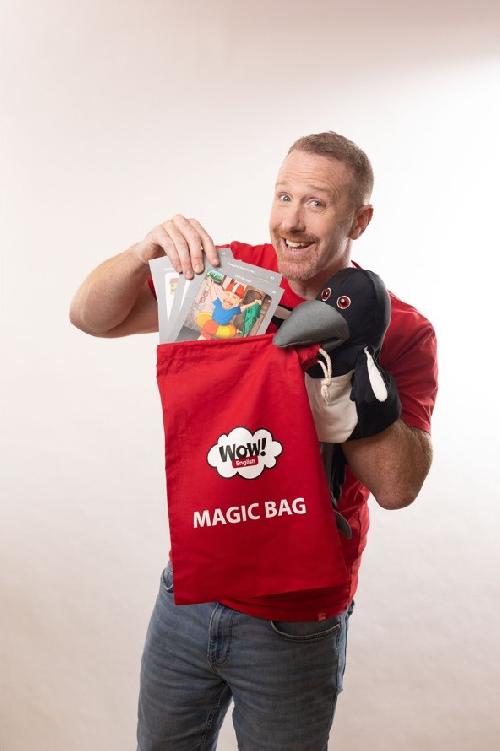
Magic Bag
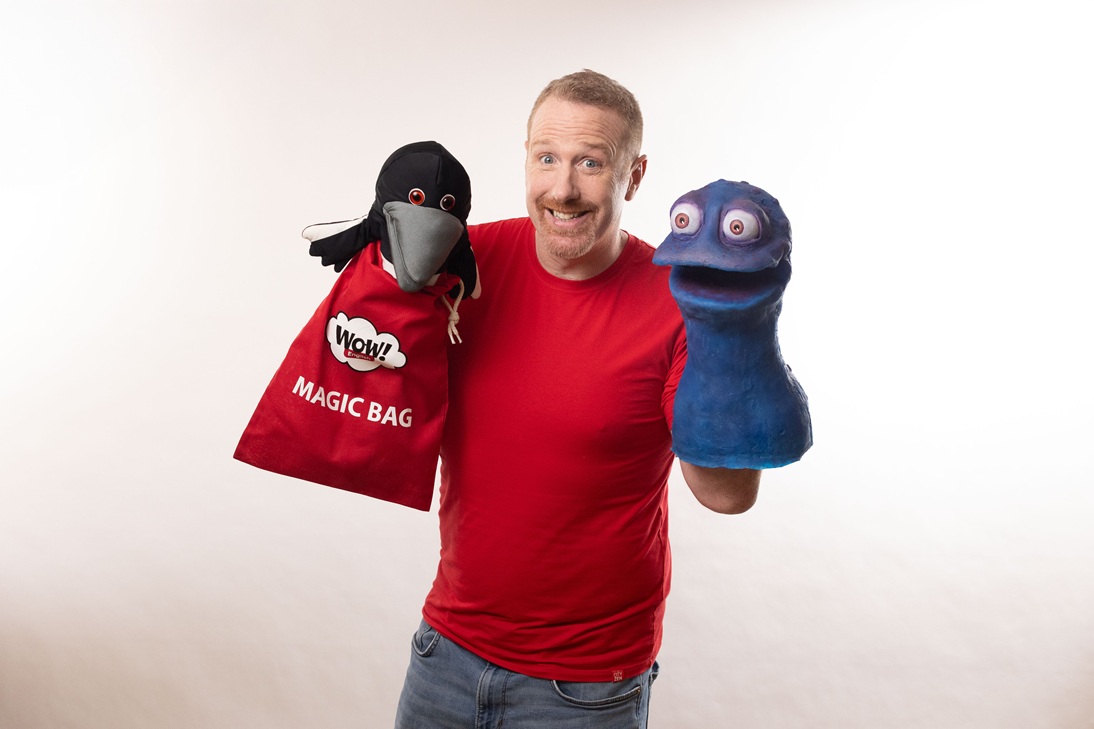
New beautiful red Wow! Magic Bag: A practical fabric bag to use in a whole range of activities during English lessons. A simple way to spice up your lessons and grab your pupils’ attention.
Ideas for using your Magic Bag at particular stages of your lessons
Starting Routine:
Hide a Maggie puppet/Bob sock puppet in the Magic Bag and say hello to it together with the pupils during the Starting Routine. Take the puppet out of the Magic Bag and use it to practise simple interactions: “What’s your name? My name is (Maggie/Bob).”
Hide something interesting in the Magic Bag that you plan to use during the lesson and that introduces a topic from your lesson - take it out and introduce the topic.
Warm Up:
TPR activity: place pictures/objects that represent language structures you want to revise around the classroom - you can use more than one picture/object of each type (for example, photocopiable black-and-white pictures). Now name the items using full sentences (for example, “There is a pen in the classroom. /I’ve got a pen. / It’s a pen.") and get the pupils to collect the pictures/objects from around the class and put them into the Magic Bag.
GP activity: hide flashcards/objects that represent language structures that you want to revise in the Magic Bag. Choose pupils at random and get them to pull objects/pictures out of the bag one at a time and name them (either chorally as a class or individually). Don’t forget to ask an appropriate question; for example, “What is it? It´s a ruler. What have you got? I've got a ruler..."
Main part of the lesson:
An entertaining way to introduce and practise new language structures (grammar or vocabulary) = INTRO+DRILL stage.
Hide flashcards in the bag and pull them out one at a time. Make it exciting and play on the pupils’ curiosity.
Instead of pictures, put real-life objects in the bag (for example, food, school things, etc.) and again pull one object at a time out of the Magic Bag. Then immediately chorally drill the language structure you want to practise.
Didactic games = TPR and GP stage:
Feely Bag: fill the bag with flashcards or objects and hand it to a pupil. Use the name of the object/picture that the pupil should find in the bag in a full sentence (for example, “It’s an apple.”). The pupil then tries to pull out the correct picture/object without looking. The ask a question such as “Is it an apple?” Everyone replies “Yes, it is.” OR “No, it isn’t.” (in which case, you ask: "What is it?". Everyone answers, for example, “It’s a banana.” Another pupil then takes a turn to play.
Pass the Bag: fill your Magic Bag with flashcards/objects and pass it round the class to music. The pupils pass the bag from one to another as long as the music is playing. When the music stops, the pupils who is holding the bag pulls out one picture/object. Then that pupil (or the whole class/a smaller group of pupils) names the picture/object using a full language structure.
Listening to audio recordings/watching videos:
When you’re listening to something or watching a video again, it’s a good idea to give the children a new task to keep their attention or make sure that they understand the language in the recording/video.
Example: put flashcards/objects into the Magic Bag, play the video/audio, and get a pupil to pull the picture/object that is being spoken/sung about in the audio/video at that time out of the bag.
End routine:
Say goodbye to the puppet and put it into the bag.
Revise some of the topics from the lesson: pupils put the things/pictures that you describe using full structures (TPR) or that they are able to name themselves (GP) into the bag.
The adventure with Steve and Maggie continues!
Discover the new Steve and Maggie app!
Fun video stories, songs, and interactive activities help children practise English naturally – at home or on the go, with no ads.
